Hearts in Business: How a Kentucky Small Business Gives Back to Kerrington’s Heart
For many small business owners, success isn't just about the bottom line—it’s about the impact you make in your local community. At Kerrington’s Heart, we are incredibly fortunate to partner with generous local entrepreneurs who use their platforms to bring support, hope, and healing to Kentucky kids and families affected by congenital heart disease (CHD).
In our new series, Hearts in Business, we sit down with local business leaders to showcase just how simple and impactful it can be to align your brand with a cause that matters.
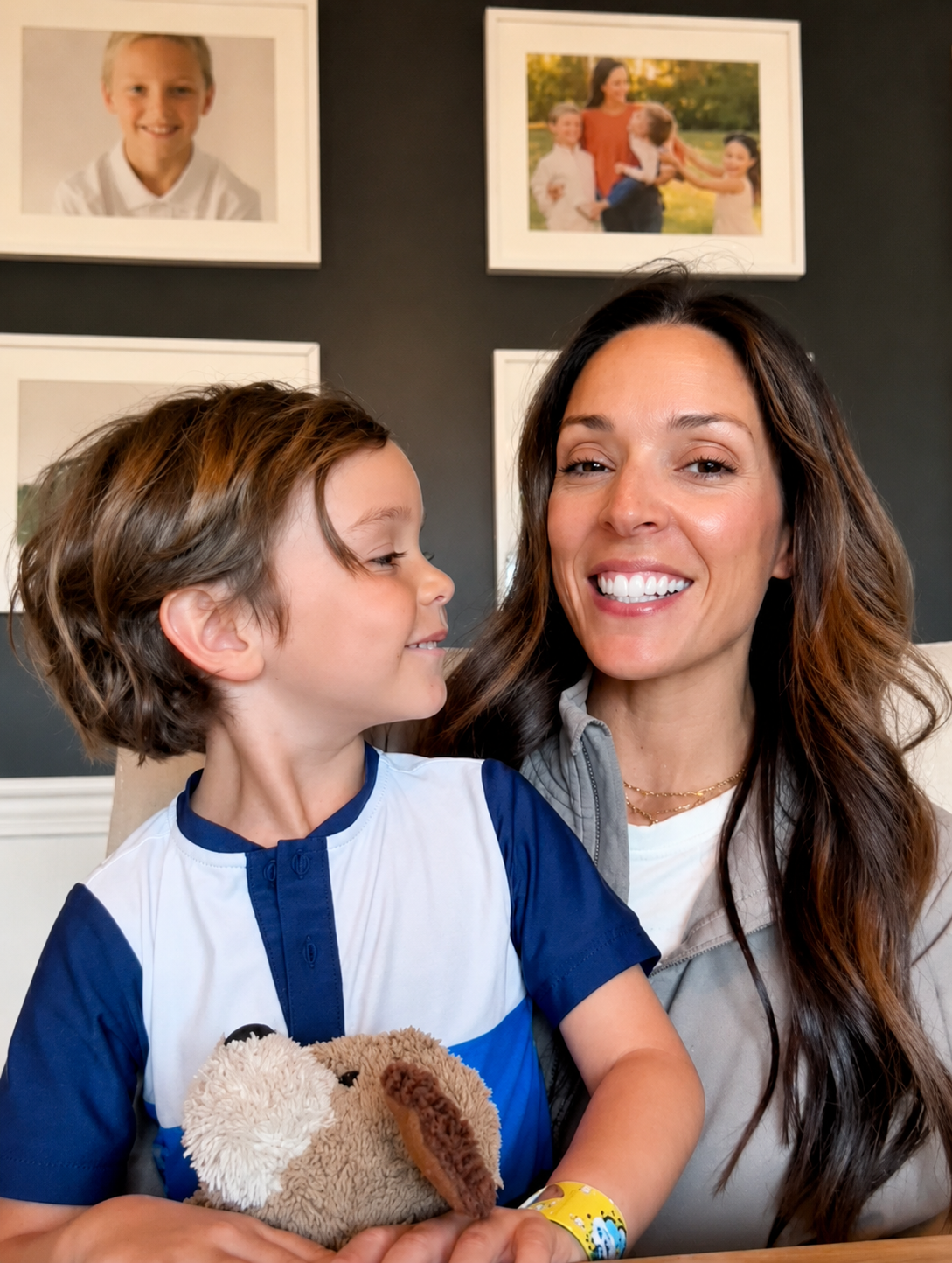
Today, we are thrilled to feature Laura Jones, a dedicated CHD mom and the co-owner of Bluegrass REmarket. Joining her for this special interview is her biggest motivation: her son, Miles!
What’s your connection to CHD and Kerrington’s Heart?
Laura: My son Miles is my littlest, and we became a part of the Kerrington’s Heart community a couple of years ago when we found out he had a congenital heart defect. He was almost three and having some health problems when we discovered he had a large ASD (Atrial Septal Defect) in his heart, and the right side of his heart was already enlarged.
His surgeon recommended open-heart surgery, which took place in October of 2024. When all of that happened, we knew absolutely nothing about the CHD world. We didn’t even know anyone else whose child had undergone open-heart surgery. We felt a little bit lost.
Thankfully, a friend recommended Kerrington’s Heart to us as a resource and to help with any financial needs. Miles only had to stay in the hospital for four days, but Kerrington’s Heart helped us immensely with DoorDash gift cards and food. As parents in the hospital, you have to eat every meal out, so that was a huge relief for us. I know they help in so many more ways for families who have to stay in the hospital for much longer periods of time. That’s how we first got connected!
What is the Bluegrass REmarket?
Laura: Bluegrass REmarket is a pop-up consignment event here in town. My friend and I started it several years ago when Miles was just a baby. We had been participating in local kids' consignment sales for many years—since my oldest was little—and we always wished there was something similar available for adults!
Bluegrass REmarket is a simple way for local men and women to sell their gently used clothing, shoes, and home decor. Consignors enter their items online, drop them off to us, and we set up a beautiful storefront for a week to sell them. It’s an easy way for people to clear out their closets, make some money, and shop great styles all in one place.
What motivates you to keep supporting our community, and how does your business give back?
Laura: Because of what we went through with Miles, we wanted to find an easy way to give back to the organization that supported us.
At Bluegrass REmarket, we sell early shopping passes. If someone wants to shop the sale early, beat the crowds, and get first dibs on everything, they can purchase a low-priced ticket for themselves and a guest. For the past few sales, we have been able to donate 100% of those ticket sales directly to Kerrington’s Heart. It’s a seamless way for our business to support Kentucky families navigating medical trauma, and it allows our shoppers to be a part of the giving, too!
Want to Feature Your Business in "Hearts in Business"?
Giving back doesn't have to be complicated. Whether it's donating a percentage of sales, organizing a toy drive or donating proceeds from a specific item, your business can make a massive difference for local CHD families.
Contact us at info@kerringtonsheart.org for partner opportunities with Kerrington’s Heart.
Maggie's Visits Chicago: A Recap of the 3rd Annual 3rd year attending FON and NPC QIC Conference
2023 was my 3rd year attending the FON and NPC QIC Conference, but it was still just as intimidating as the first year. Surrounded by some of the leading medical professionals in pediatric cardiology as well as seasoned parents who have been part of this collaborative far longer than I and CHD patients who understand the importance of conferences like this on a level that I never will is likely to always be intimidating, to say the least. Due to my fear of airports, I loaded my car with my luggage and snacks to make the 7 hour drive to Chicago. Despite my nerves, excitement and anticipation were at the forefront of my mind as I embarked on my journey. Though, I will never feel prepared enough for a conference of this magnitude, I was still experienced enough to be surprised by the depth of information and surprises that emerged at this year’s conference.
So what is the FON and NPC QIC Fall Learning Session? FON stands for Fontan Outcomes Network and is a learning network that utilizes a registry to collect data over the lifespan of patients with a Fontan heart in order to promote research and quality improvement. The NPC QIC is the National Pediatric Cardiology Quality Improvement Collaborative. In laymen’s terms these networks bring providers together with patients and parents to engage and encourage research and quality improvement. As both networks have similar if not the same missions, they are in the process of merging into one network. Thus far, they have established an aspirational timeline to achieve this goal and have begun the process of initiating community building and engagement. They have also created lifespan data bridge workgroups with a goal to begin implementation by 2024.
One of the chief functions of both collaboratives, which will continue as they merge, is identifying the causes of variations at the center level. While common causes are inherent in the system and occur all of the time, their data collection allows them to identify and target special cause variation. Examples of the this are: different operational definitions of a measure, different sampling or measurement methods, a case-mix of patients in different subgroups, changes in personnel, changes in staffing, unusual volume whether it be low or high, different equipment, and equipment malfunctions. This is an important variable to determine as it helps care centers establish necessary changes to improve the quality of life as well as mortality rates. As a heart parent, I can attest that no care center or even physicians at the same care center will always agree on the best course of action for a patient. If you have 6 different cardiologists look at the exact same echocardiogram, it is likely that you will receive 6 different interpretations. Because of this, identifying these differentiations can help facilitate data sharing as well as coming to a consensus which makes the entire process less stressful and confusing for patients and families.
An integral part of collecting this information is data transparency. One of the medical centers presenting at the conference this year highlighted the importance of transparency by sharing about their experience with improving feeding at the care center level. I was especially excited about this session of the conference as my daughter, Evie, has struggled with oral feeding for the majority of her life. In fact, she had a feeding tube longer than she has been without one thus far. Part of the anxiety that came with this revolved around feeling like I didn’t have much a voice regarding her feeding concerns. After, who was I to disagree with such highly educated and experienced medical professionals? Kansas City Medical Center recognized this need and concern in their patients’ families and by utilizing parent engagement for tube weaning, they were able to acknowledge some of the most prevalent parent concerns regarding feeding during the first year after birth. Issues such as a lack of consistency and communication between providers, not listening to parents and their point of view as well as could be, and not starting at birth with oral feeding were at the forefront. Due to the information that they gathered, Kansas City Medical Center implemented the following changes: a focus on short term tube management and weaning, creation of a pre-operative feeding protocol, and education for FON and NPC QIC Blog the entire medical team. As a result, rates of pre-operative feeding increased from 39.5% to 75% while rates of necrotizing enterocolitis (NEC) did NOT increase as was the concern. Today, Kansas City Medical Center regularly utilizes listening to parent feedback, ensuring someone owns the feeding experience, focusing on positive feeding experiences, creating a structured hand off, and increasing communication with nutritionists via TEAMS in their daily practices.
Another area of focus this year at the conference was centered around physical activity and exercise. Three of the categories focused on were: exercise and Fontan wellness, reviews and statements discussing Fontan exercise, and new research that identifies specific exercises beneficial and safe for Fontan patients. Whereas most often the concern is ensuring that children aren’t required to do more than their heart anatomy can handle, I felt like I was on the opposite end of the spectrum. Evie, quite literally, won’t stop unless she’s sick. I often refer to her as my “heartergizer bunny” because she simply keeps going even if she shouldn’t. Still, I was fascinated by what was being discussed because it gave me insight into what she may experience as she gets older but also because it provided me with the tools I will need to establish an appropriate plan for her physical needs moving forward. Additionally, as the presenters broke things down into phases and identified common barriers that CHD children will face (i.e. meeting the patients where they are instead of hitting specific milestones, knowing the difference between normal responses versus concerning responses, addressing exercise testing anxiety, etc.), concerns are addressed at a structured and developmental level as opposed to what is “expected”. After all, when do any of our children respond in a way that is expected?
Much of these measures are possible due to the FON Registry. Launched in 2021 with only an initial 12 sights, it now boasts over 30 centers with 6 new ones added in 2023 alone. 1000 patients are currently enrolled and registered in the FON Registry. This data collection directly affects all CHD patients and families by tracking outcomes, liver function, and ensuring reliable assessment and surveillance of patients. In fact, a direct result of the registry is the Liver Health Project which strives to improve reliable liver health education, surveillance, and management of individuals with Fontan circulation. As the parent of a child with Fontan circulation, it provided me with a modicum of comfort to know that the pediatric cardiology medical community is not only aware but also actively researching liver concerns in CHD children. This serves as a reminder and emphasizes their mission of being family and patient focused.
Perhaps most importantly, the FON and NPC QIC conference focused on the emotional well being of patients and families, not only during hospital stays but throughout the lifespan as well. As parents, one of our biggest concerns is the mental health of our children. Their physical and medical needs receive much attention and focus, but our emotional concerns can often feel like they take a back burner. When the collaborative polled the medical professionals involved, 57% reported high levels of interest in the emotional and mental health needs of children with chronic medical conditions. Of that 57%, 63% stated that they felt that addressing these concerns were the responsibility of their subspecialty but a mere 20% reported feeling competent in the skills necessary to ensure the mental health of their patients.


Because of this, the collaborative as a whole encourages that clinicians utilize strategies to initiate and maintain the dialogue surrounding such an important aspect of quality of life for patients and families.
These include: recognizing that you don’t have to be a mental health professional to be an advocate, finding your own voice and using language that is comfortable, encouraging patients and families to let clinicians know how they’re doing even if not asked, asking open ended questions (i.e. what are your questions or concerns instead of do you have any questions or concerns), not telling patients and families not to worry about something or that you know how they feel, asking follow up questions, acknowledging vulnerability, providing realistic expectations, acknowledging psychological distress but not allowing it to dictate diagnosis or treatment, etc. The focus being placed on this issue was especially encouraging for me as I’m sure I’m not alone in the sentiment that often times, simply having someone, anyone, even if not a medical professional, ask how you’re doing and actually being invested in the answer is huge anxiety reliever and validates how the patient or parent is feeling.
Ultimately, I felt a keen sense of fulfillment and engagement at this year's conference. I felt that so many of the topics discussed applied to me on a personal level but also to the Kentucky families that Kerrington’s Heart strives to serve. The level of engagement from parents and clinicians was encouraging, but getting to meet and hear from CHD patients was the highlight and truly inspirational. I left the conference with not only the knowledge that I had absorbed but a new understanding of the journeys of others.